Amivantamab in Recurrent/Metastatic Head and Neck Squamous Cell Cancer After Checkpoint Inhibitor and Chemotherapy: Pivotal Results From the Phase Ib/II OrigAMI-4 Study

Author(s): Barbara Burtness, MD1; Ari J. Rosenberg, MD2; Benoit Calderon, MD3; Sun Min Lim, MD4; Muh-Hwa Yang, MD, PhD5; Shau-Hsuan Li, MD6; Shigenori Kadowaki, MD, PhD7; Paul L. Swiecicki, MD8; Jessica L. Geiger, MD9; William Ince, MBBS10; Dennis Hahn, MD11; Ye Guo, MD12; Douglas Adkins, MD13; Robert Metcalf, PhD, MBChB, MRCP14; Myung-Ju Ahn, MD, PhD15; Ammar Sukari, MD16; Irene Braña, MD17; Bhumsuk Keam, MD, PhD18; Hideki Tanaka, MD19; Siddharth Sheth, DO, MPH20; Marc Oliva, MD, PhD21; Xuesong Lyu, PhD22; Joshua C. Curtin, PhD23; Kiichiro Toyoizumi, PhD24; John Xie, PhD25; Mark Wade, MA23; Brooke Diorio, PhD26; Aastha Kapoor, PhD23; Emrullah Yilmaz, MD, PhD25; Mahadi Baig, MD25; Priya Kim, MD23; Remy B. Verheijen, PharmD, PhD27; Sujay Shah, MD23; Kevin J. Harrington, MBBS, PhD28; for the OrigAMI-4 Cohort 1 Investigators;
Source: DOI: 10.1200/JCO-26-01042

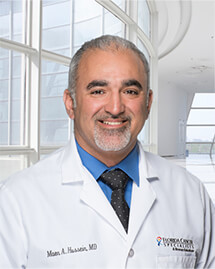
Dr. Maen Hussein's Thoughts

Epidermal growth factor receptor (EGFR) and MET are overexpressed in recurrent/metastatic (R/M) head/neck squamous cell cancer (HNSCC). Subcutaneous amivantamab administered every 3 weeks in participants with non-human papillomavirus R/M HNSCC after PD-(L)1 inhibitor and platinum-based chemotherapy. prior anti EGFR and HPV positive patients were excluded. In 102 participants, blind independent central review assessed objective response rates (ORRs) was 42% (around 20% for second line chemotherapy or cetuximab) the complete response rate was 15%. At a median follow-up of 11.8 months, median progression-free survival (PFS) and overall survival (OS) were 6.8 months and 12.5 months respectively. A non-chemotherapy option for HPV negative patients with promising outcome. Toxicity can still be an issue with those pts

ABSTRACT

AbstractAbstractSingle-agent paclitaxel or cetuximab after immune checkpoint inhibitor (ICI) and chemotherapy demonstrated objective response rates (ORRs) of 21%-24% in recurrent/metastatic (R/M) head/neck squamous cell cancer (HNSCC). Epidermal growth factor receptor (EGFR) and MET are overexpressed in R/M HNSCC. Amivantamab, an EGFR-MET bispecific antibody, may be a rational treatment. Cohort 1 of OrigAMI-4 (ClinicalTrials.gov identifier: NCT06385080) evaluated subcutaneous amivantamab administered every 3 weeks in participants with non-human papillomavirus R/M HNSCC after PD-(L)1 inhibitor and platinum-based chemotherapy. Prior anti-EGFR therapy and p16-positive oropharyngeal cancer were exclusionary. The primary end point was RECIST v1.1 ORR. Secondary end points included duration of response (DoR), progression-free survival (PFS), overall survival (OS), and safety. In 102 participants, blinded independent central review‑assessed ORR was 42% (95% CI, 32 to 52); the complete response rate was 15%. Median DoR was not reached (NR; 95% CI, 6.9 to NR); 56% of responses lasted ≥6 months. Investigator-assessed ORR was 47% (95% CI, 37 to 57). a median follow-up of 11.8 months (range, 1.1-21.9), median PFS and OS were 6.8 months (95% CI, 5.2 to 8.3) and 12.5 months (95% CI, 10.2 to 16.8), respectively. Adverse events were consistent with previous experience with no new safety signals. Treatment-related discontinuations were low (8%). Amivantamab demonstrated greater antitumor activity in participants previously exposed to ICI and chemotherapy than has been reported for paclitaxel or cetuximab.Graphical Abstract

Author Affiliations

1Department of Internal Medicine and Yale Cancer Center, Yale School of Medicine, New Haven, CT; 2Department of Medicine, Section of Hematology and Oncology, University of Chicago, Chicago, IL; 3Institut Sainte Catherine, Avignon, France; 4Division of Medical Oncology, Department of Internal Medicine, Yonsei Cancer Center, Severance Hospital, Yonsei University Health System, Seoul, Republic of Korea; 5Division of Medical Oncology, Department of Oncology, Taipei Veterans General Hospital, Taipei, Taiwan; 6Department of Hematology-Oncology, Kaohsiung Chang Gung Memorial Hospital and Chang Gung University College of Medicine, Kaohsiung, Taiwan; 7Department of Clinical Oncology, Aichi Cancer Center Hospital, Nagoya, Japan; 8Division of Hematology/Oncology, Department of Internal Medicine, University of Michigan Rogel Cancer Center, Ann Arbor, MI; 9Department of Hematology and Medical Oncology, Taussig Cancer Institute, Cleveland Clinic, Cleveland, OH; 10Addenbrooke's Hospital, Cambridge, United Kingdom; 11Department of Hematology, Oncology, Stem-Cell Transplantation, and Palliative Care, Klinikum Stuttgart, Stuttgart, Germany; 12Department of Oncology, Shanghai East Hospital, School of Medicine, Tongji University, Shanghai, China; 13Washington University School of Medicine, Robert Ebert and Greg Stubblefield Head and Neck Tumor Center, Alvin J. Siteman Cancer Center, and Barnes Jewish Hospital, St. Louis, MO; 14The Christie NHS Foundation Trust, Manchester, United Kingdom; 15Division of Haematology-Oncology, Department of Medicine, Hanyang University Medical Center, Hanyang University College of Medicine, Seoul, Republic of Korea; 16Karmanos Cancer Institute, Detroit, MI; 17Vall d’Hebron Hospital Campus and Institute of Oncology (VHIO), IIS IR-HUVH, Barcelona, Spain; 18Department of Internal Medicine, Seoul National University Hospital, Seoul, Republic of Korea; 19Department of Otorhinolaryngology, Head and Neck Surgery, Tokyo Medical University, Tokyo, Japan; 20Division of Oncology, Department of Medicine, University of North Carolina Chapel Hill, Chapel Hill, NC; 21Institut Català d’Oncologia, Hospital Duran i Reynals, Barcelona, Spain; 22Johnson & Johnson, Shanghai, China; 23Johnson & Johnson, Spring House, PA; 24Johnson & Johnson, Tokyo, Japan; 25Johnson & Johnson, Raritan, NJ; 26Johnson & Johnson, Titusville, NJ; 27Johnson & Johnson, Leiden, the Netherlands; 28The Institute of Cancer Research/Royal Marsden Hospital, London, United Kingdom
Leave a Comment

Your email address will not be published. Required fields are marked *

Related Articles

Pembrolizumab With or Without Lenvatinib as First-Line Therapy for Recurrent or Metastatic Head and Neck Squamous Cell Carcinoma: Phase III LEAP-010 Study

Combination improved progression-free survival (PFS) 6.2 months vs 2.8 months, hazard ratio (HR) 0.64 but not overall survival (OS) (15 months for combination vs 17.9 months for pembro), no safety concerns. Overall, although the combination demonstrated a clinically meaningful PFS advantage, the absence of an OS benefit limits its impact on standard first-line treatment, where survival remains the key endpoint.

Read More »

Neoadjuvant and Adjuvant Pembrolizumab in Locally Advanced Head and Neck Cancer

The KEYNOTE-689 trial evaluated perioperative pembrolizumab + SOC (surgery + adjuvant RT ± cisplatin) in resectable, locally advanced head and neck squamous-cell carcinoma (HNSCC) that is at least 1% PDL1 positive. The addition of pembrolizumab significantly improved 3-year event-free survival (EFS) in all PD-L1 subgroups: CPS≥10 (59.8% vs 45.9%), CPS≥1 (58.2% vs 44.9%), and the total population (57.6% vs 46.4%). Three-year overall survival (OS) also favored pembrolizumab: CPS≥10 (68.2% vs 59.2%), CPS≥1 (69.0% vs 60.2%), and total (68.4% vs 61.1%), though OS was not formally tested at this interim. Toxicities were as expected. Bottom line: perioperative pembro is now a part of the treatment paradigm for locally advanced HNCSCC with PDL1 expression.

Read More »